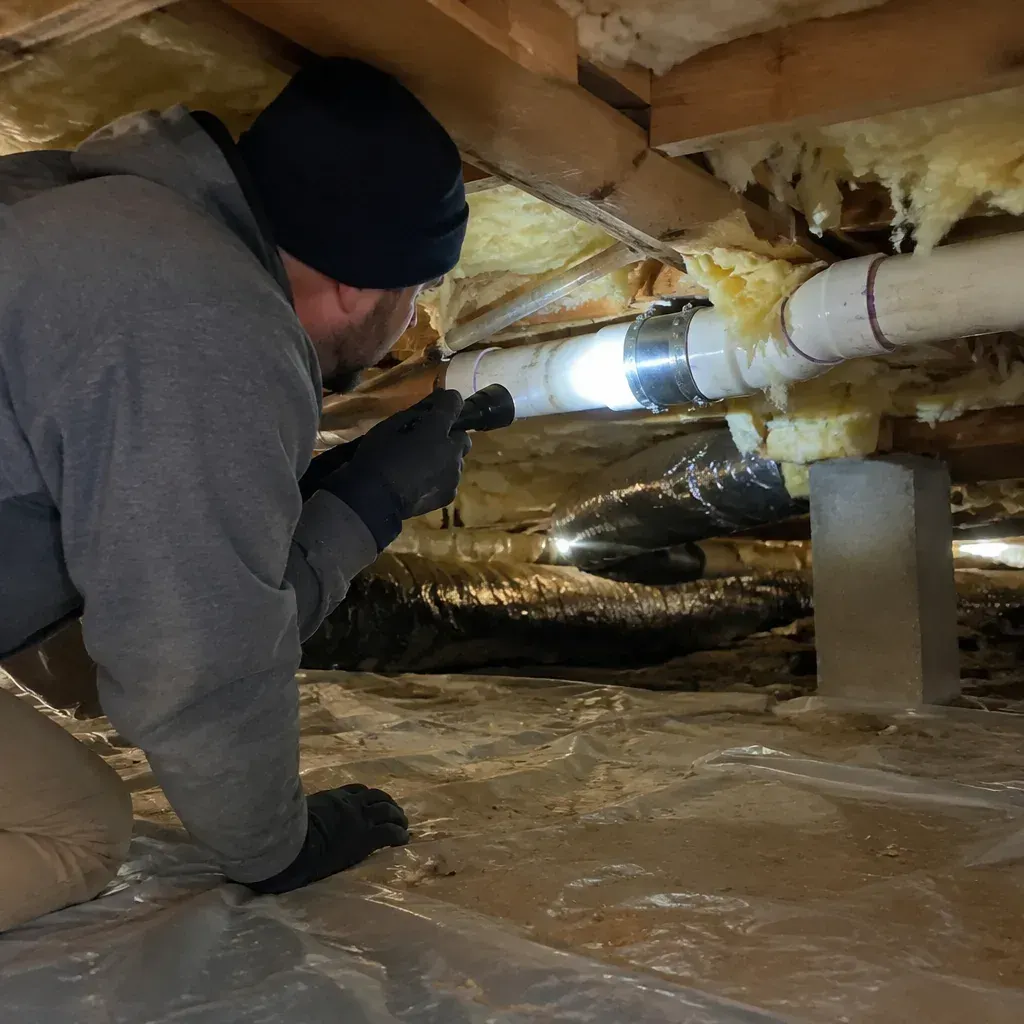
West Jordan Burst Pipe Coupling Choices
Trace where water appears, then compare slip and push-fit options against the pipe and the coupling’s stated limits.
Water flow has to stop before the line is opened, or water can escape during the repair. The pipe ends must meet the product’s preparation requirements, and the finished connection needs a leak check under pressure.
Trace Water Back to the Break
Start with where water appears, then follow its path before judging a pipe connection. A wet cabinet floor, ceiling mark, or visible spray can point toward a supply line, though water may run along framing before it shows. In West Jordan, a house near Bingham Creek and a small commercial space can have different access around the same kind of damaged line. A burst pipe coupling matters only after the damaged stretch and the pipe that would remain are understood.
Next, note whether the exposed line is still wet and whether the damp area grows. Water can run along a pipe before dripping, so the damp spot may not mark the opening. Those differences affect whether the fitting can occupy the available space, but neither design suits every layout. In West Jordan, a narrow cabinet or crowded utility area can make clearance worth recording before anyone compares a coupling with the line.
Then identify any visible markings and the pipe’s outside diameter; appearance alone may not establish either. Copper, PEX, and CPVC have different connection requirements, and nominal size is not always the dimension a fitting uses. A mismatch can leave a joint that seems seated but does not seal. For a West Jordan property, compare the existing pipe and proposed replacement pipe separately against the coupling’s listed materials and dimensions, rather than assuming similar-looking ends will join.
When a Slip Coupling Fits
Look closely at the exposed pipe near the wettest point for scratches, dents, corrosion, or an irregular edge. A seal depends on the surface and shape the fitting is designed to meet; a damaged end can undermine that contact. The same concern applies if the pipe shifts out of line or is under strain. In West Jordan, a stain near the Jordan River does not identify the break by itself, so the visible pipe condition matters more than the stain’s location.
Check whether a push-fit model is specifically approved for the pipe material and use location. Its internal grip and seal depend on the pipe meeting the manufacturer’s requirements, including a clean, square end and the stated insertion depth. Some models also require a depth mark to confirm engagement. These details distinguish a listed push-fit connection from a fitting that merely appears to fit. In West Jordan, the product instructions are the useful reference when a line’s markings are unclear.
For a slip style, observe how much straight pipe is available on both sides of the intended replacement area and whether the coupling can move into its final position. The fitting’s travel has to allow engagement with both ends while leaving the replacement piece aligned. Bends, nearby joints, or fixed supports can limit that movement. In West Jordan, a pipe visible in a basement may offer different clearance from one tucked behind a finished wall; the fitting specification still sets the required travel.
Push-Fit Pipe and End Requirements
Once material and size appear to match, compare the coupling’s working pressure and temperature limits with the water line’s conditions. A fitting rated for one application may not be suitable for another, even if its dimensions look right. For drinking-water service, confirm that the product is approved for potable water as well. A West Jordan home or business should be assessed by the actual line and fitting data; seasonal freezing in the region does not establish what caused damage at a particular address.
Watch for fresh moisture at the damaged area and nearby joints, since water can spread beyond the original leak. A connection that stays dry while the line is not carrying pressure has not shown how it behaves in service. The completed section needs a leak check under pressure before it is covered, with water flow confirmed. In West Jordan, that check concerns the plumbing connection; wet building materials may need separate drying or restoration attention.
Check the Coupling’s Rated Limits
Read the instructions for the exact coupling model when any detail remains uncertain. They specify eligible pipe systems, end condition, engagement depth, assembly limits, and sometimes where the fitting may be installed. A general label such as push-fit or slip does not settle those particulars. At a West Jordan property near The District, the same careful comparison applies as elsewhere: the written product requirements and the observed pipe must agree before the connection is considered suitable.
If the pipe is concealed or its markings cannot be seen, the fitting choice remains uncertain until its material, dimensions, and condition are established. A damp patch may be some distance from the break, and nearby fittings can complicate what the visible evidence suggests. In West Jordan, whether a line serves a house or a small commercial property, compare the existing run, replacement piece, and coupling as one system. That comparison clarifies whether either coupling type meets the requirements.
Compare These Coupling Details
- Verify the listed pipe systems and outside dimensions for the existing line and replacement piece; similar appearance does not prove a match.
- Compare working pressure, temperature limits, and potable-water approval with the line’s intended use.
- Check the model’s requirements for end condition, fitting travel, insertion depth, and final leak inspection.
- Check approval for both pipe materials and measured diameters; a coupling that fits one side of a replacement section may not suit the existing line.
- Compare the required cut-end condition and insertion depth with the product instructions; a push-fit joint may not seat when an end misses those specifications.
- Confirm the coupling’s pressure, temperature, and drinking-water ratings suit the supply line; matching dimensions alone do not establish that it is suitable.
Your Questions
Can a slip repair coupling bridge a cut pipe section?
A slip repair coupling is suitable when its listing covers the pipe on both sides, its dimensions match, and there is enough straight access for it to engage both ends at the specified depth. The pipe must also be in suitable condition, and the fitting’s pressure, temperature, and water-use ratings must cover the line. If a nearby bend or fixed joint limits travel, that style may not fit the available layout.
Which pipe materials can a push-fit coupling accept?
Only when the particular push-fit model is approved for both pipe materials and their dimensions. A fitting’s ability to grip one type of pipe does not establish that it seals another. Check its product listing for the accepted systems, end condition, insertion depth, pressure and temperature limits, and potable-water approval where relevant. If the line’s material is unknown, compatibility cannot be confirmed from the fitting’s appearance.
What ratings should a burst pipe coupling have?
A sound connection should remain dry when the line is under normal operating pressure, and water should flow through the replacement section. The coupling and nearby pipe ends need to be observed before the area is closed, since moisture can show that the seal or fit is inadequate. Water visible elsewhere may have traveled from the joint, so the inspection should account for the pipe path as well as the fitting itself.
Check the Coupling’s Product Information
Whether the line is near Ron Wood Park or elsewhere in West Jordan, ask the pros we connect you with to identify the coupling and its listed compatibility.
Call (801) 417-8013